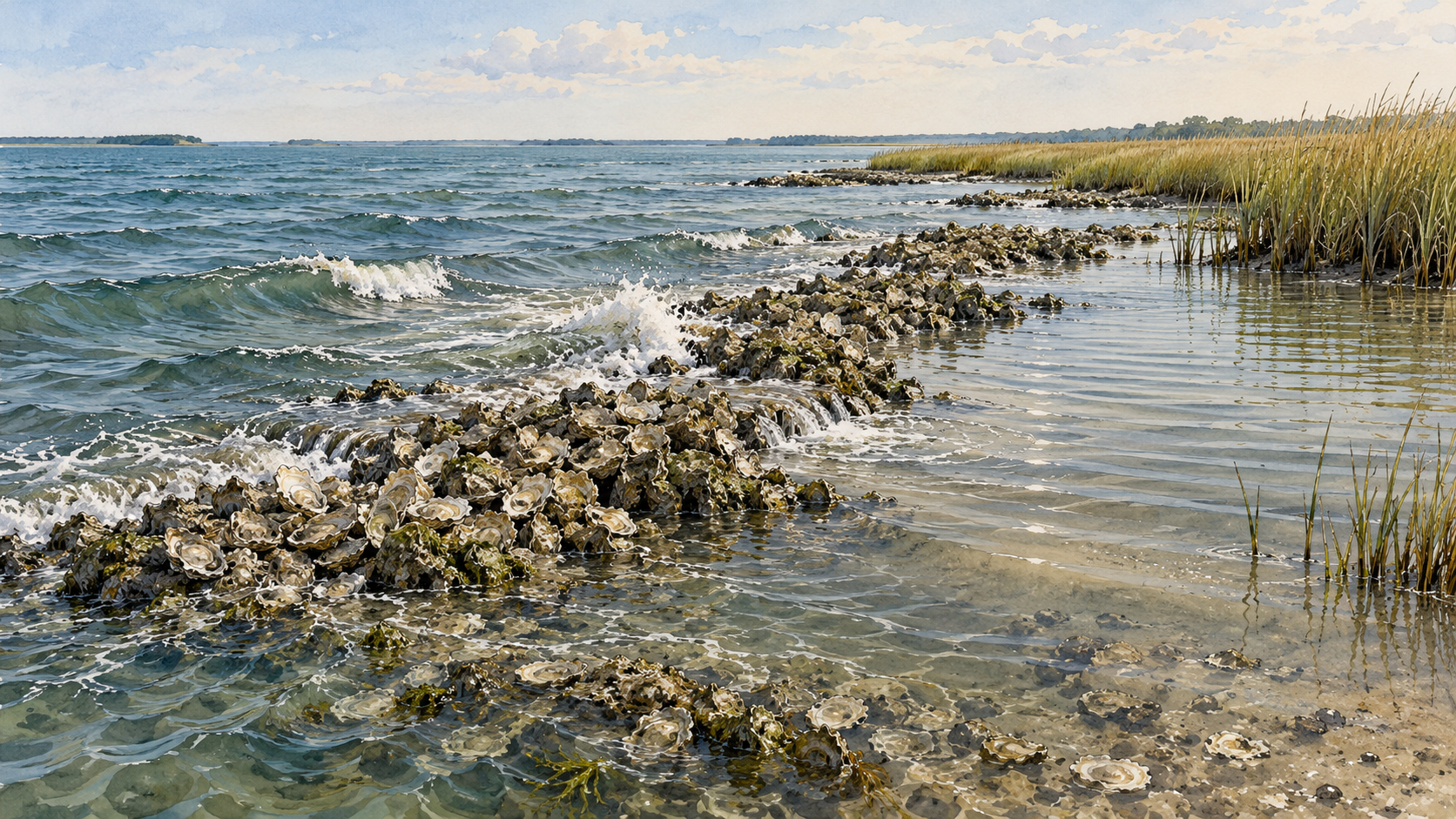
How an oyster reef changes moving water
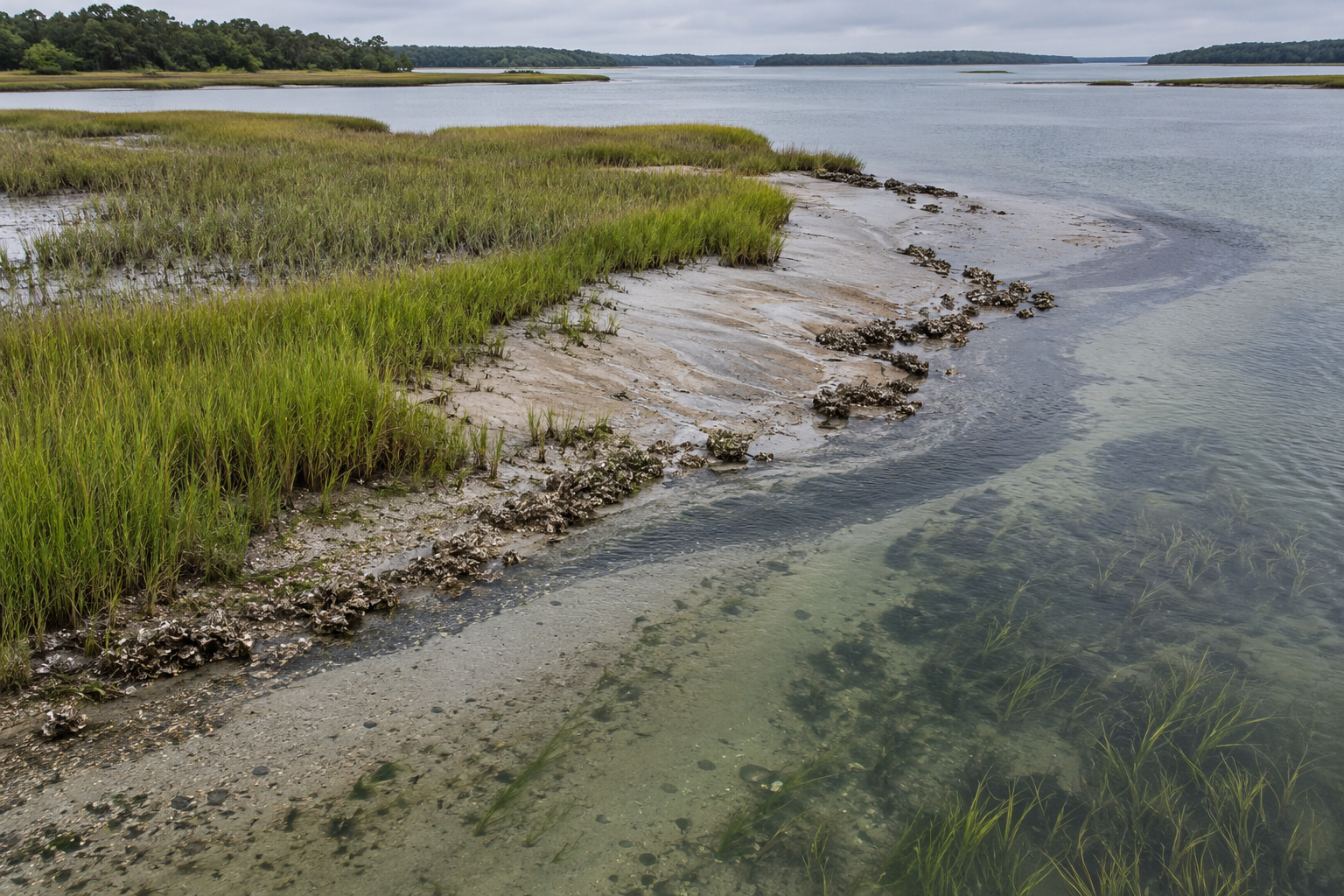
An oyster reef is a rough, living ridge. Waves, tides and sediment meet it differently at the crest, in its gaps and behind it, with effects that change as water rises and oysters grow.
About the author
I write about coastal ecology and the processes that connect mud, salt, plants and animals. My interests include habitat change, restoration evidence and the difficulty of measuring a shoreline that keeps moving.
I build each essay around a concrete question, read the underlying sources and separate observed results from interpretation. I want the details to remain clear enough that a reader can follow the argument and examine the evidence.
An oyster reef is a rough, living ridge. Waves, tides and sediment meet it differently at the crest, in its gaps and behind it, with effects that change as water rises and oysters grow.
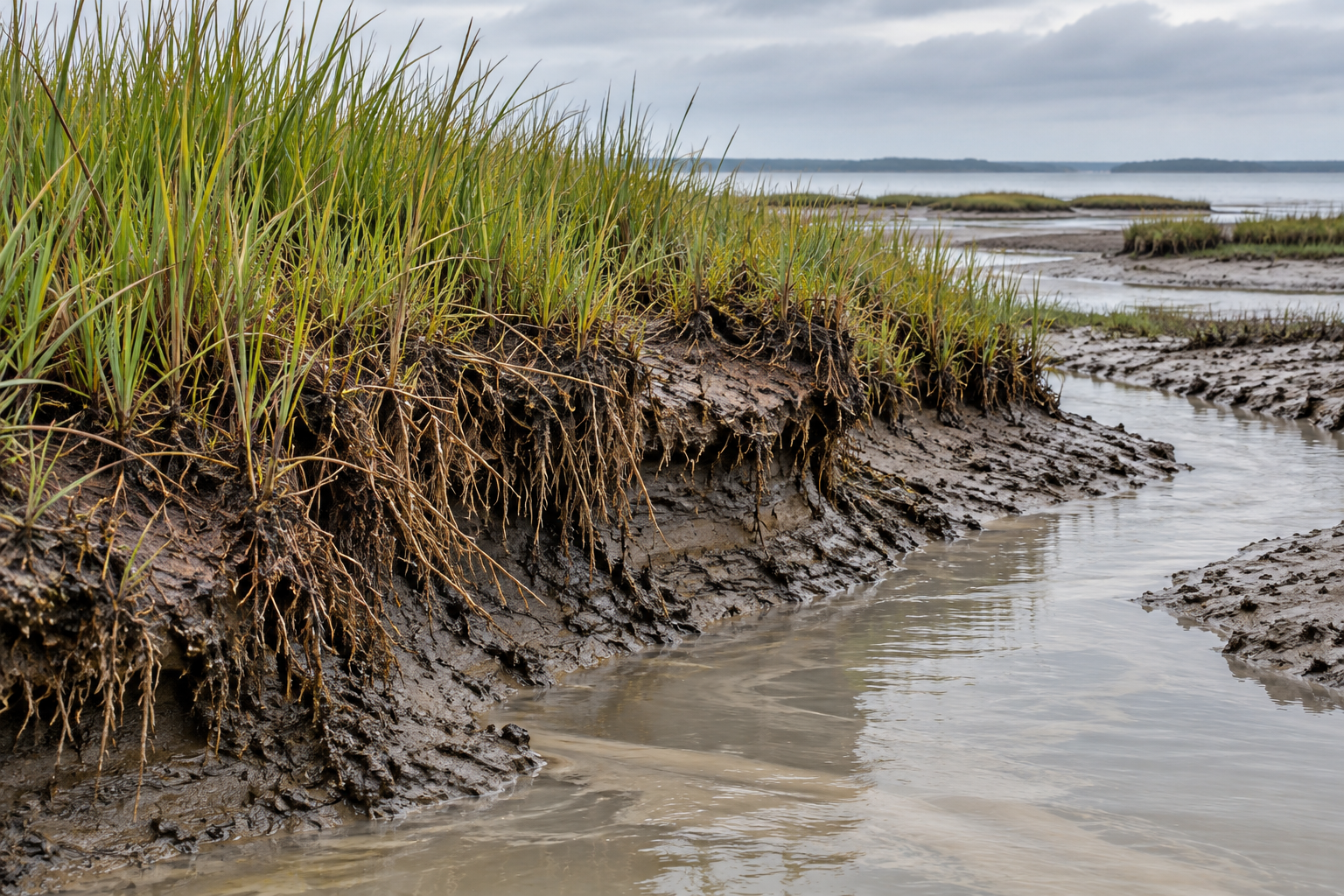
A planted shore survives by more than holding its edge. Its marsh needs a continuing balance of incoming, trapped and lost sediment, measured across the whole coastal margin.
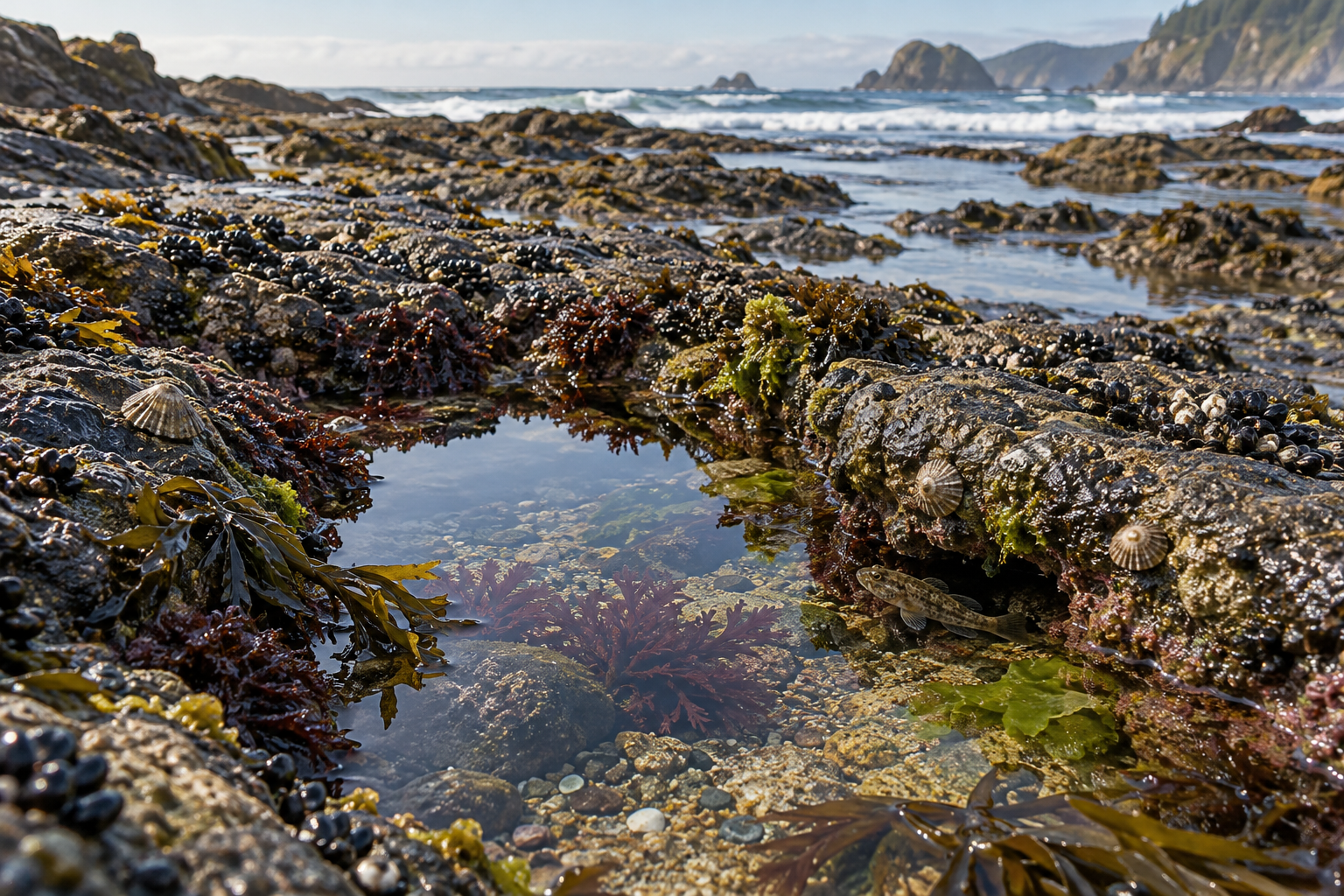
A tide pool holds seawater when the shore empties, then becomes a changing habitat shaped by light, weather, rock and the lives inside it.
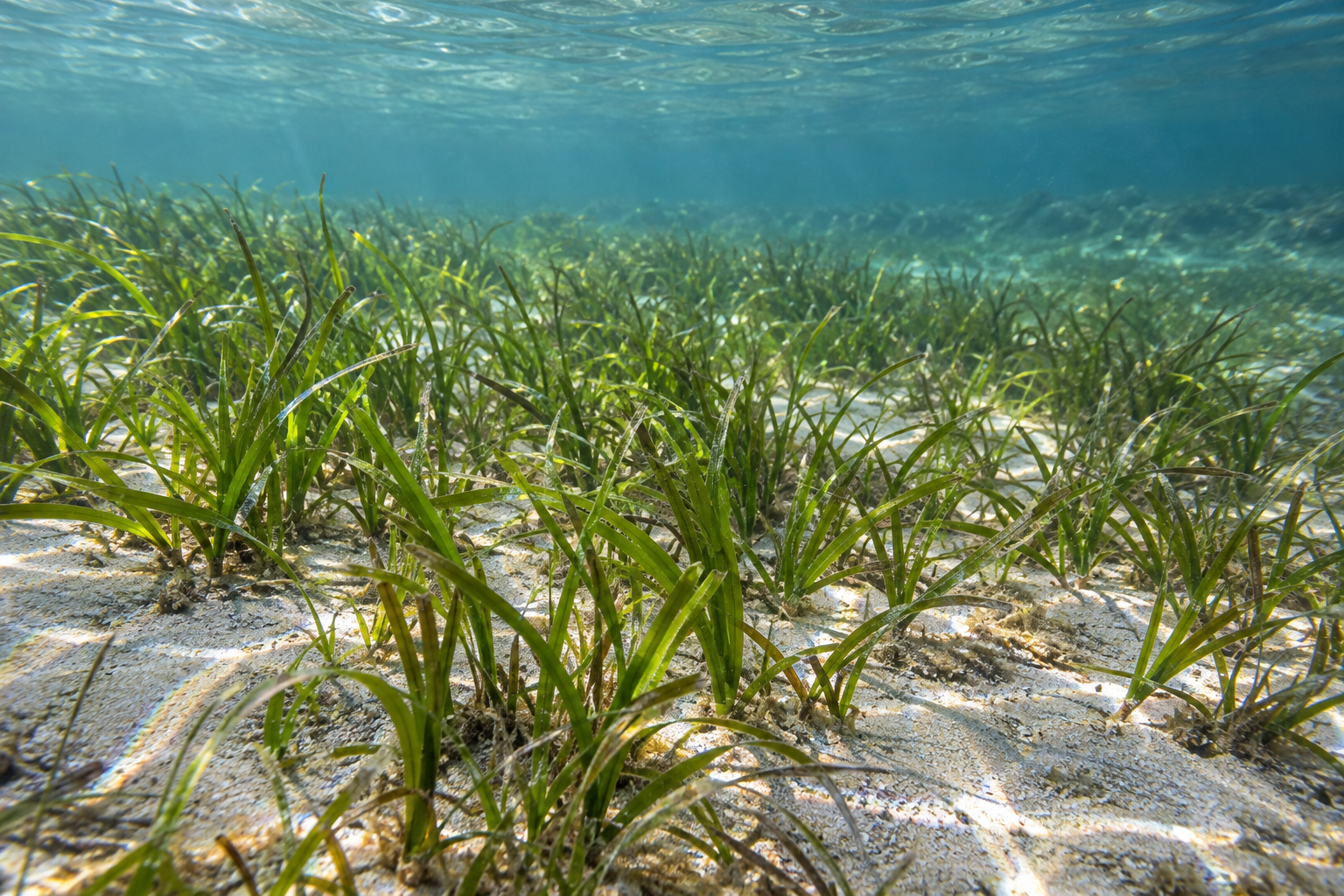
Seagrass leaves must collect enough light beneath the surface to support the whole plant. Cloudy water, algae, and fine sediment on the leaves change that light budget, while a healthy meadow can help steady the sediment around it.
A marsh gathers sediment from the tide and builds soil with roots. Measuring the new layer alone can miss whether the ground itself is gaining height.